 Optical Glass Components
 Infrared Optical Elements
 Laser Lens
 English
 Español
 italiano
 русский
 Türkçe
 Polska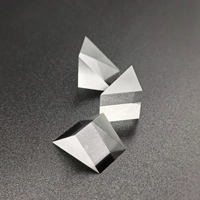

Mar 26-2026
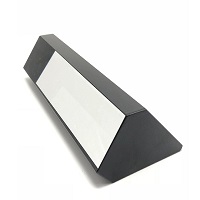
In high-energy physics, precision is paramount. Experiments often require the accurate manipulation and analysis of light across a broad spectrum, sometimes under extreme conditions. One of the key components that enable such precision is the fused quartz prism. These prisms, made from fused silica, are known for their durability, stability, and high optical performance. Their unique characteristics make them ideal for use in advanced scientific instruments, particularly in the demanding field of high-energy physics. In this article, we will explore why fused quartz prisms are essential for high-energy physics experiments and how they contribute to achieving unparalleled precision in such environments.
The primary reason fused quartz prisms are so widely used in high-energy physics experiments is their exceptional optical properties. Fused quartz is transparent across a wide range of wavelengths, including UV and visible light, making it highly versatile in various optical applications. The ability of fused quartz to maintain optical clarity without distortion ensures that it can handle high-energy light with precision, which is crucial in fields like laser physics and spectroscopy. Whether the experiment involves detecting high-energy particles or measuring light's behavior under extreme conditions, fused quartz prisms offer the high-performance optics needed for accurate results.
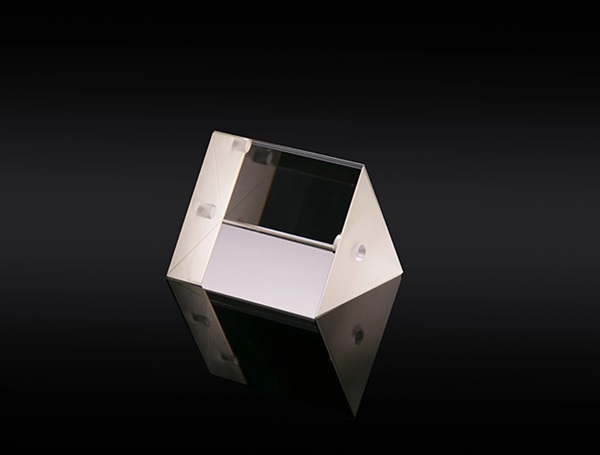
High-energy physics experiments often involve environments with significant temperature fluctuations and intense energy levels. This is where the durability and thermal stability of fused quartz prisms come into play. Unlike many other optical materials, fused quartz has an extremely low coefficient of thermal expansion, which means it is less susceptible to thermal stress. This characteristic is essential in high-energy physics, where instruments can be exposed to rapid heating and cooling cycles without compromising their performance. Fused quartz prisms maintain their structural integrity even in high-energy laser systems, making them ideal for precision instruments like spectrometers, interferometers, and detectors that require stable optical performance under such extreme conditions.
In high-energy physics experiments, it is essential to transmit as much light as possible without loss. Fused quartz prisms are particularly valued for their high light transmission properties, especially in the ultraviolet and visible spectra. This quality makes them crucial for high-resolution measurements, as they allow light to pass through with minimal absorption or scattering. The low absorption rate of fused quartz helps in maximizing the intensity of the light passing through, which is particularly important in applications such as laser spectroscopy, where every photon counts. The high light transmission ensures that fused quartz prisms can effectively contribute to the sensitivity and precision of high-energy physics instruments.
In high-energy physics, one of the primary applications of fused quartz prisms is in particle detection systems. These prisms are used to direct, split, or focus light in detectors that measure the properties of subatomic particles. For example, in systems such as Cherenkov detectors or scintillation counters, fused quartz prisms help manage light pathways to improve the accuracy of particle identification. By controlling the direction of light with high precision, these prisms ensure that the detectors receive the correct light signals, which is essential for detecting the faint and elusive traces of high-energy particles. This level of precision is critical in experiments that explore fundamental physics, such as those conducted at particle accelerators.
Fused quartz prisms are not limited to a single type of optical system; their versatility allows them to be integrated into a wide range of high-energy physics equipment. These prisms can be customized for different experimental needs, whether it's for splitting beams, changing their direction, or introducing specific optical effects such as dispersion. Their ability to be coated with anti-reflective or other specialized coatings further enhances their performance by reducing reflection and maximizing light transmission. Fused quartz prisms are used in various setups, from laser systems and interferometers to spectrometers and imaging devices. Their adaptability makes them indispensable in the development and improvement of high-energy physics instruments that require both flexibility and precision.
In conclusion, fused quartz prisms are a crucial component in high-energy physics, enabling precision experiments through their superior optical properties, thermal stability, and versatility. They offer unmatched performance in controlling light, whether it is through ensuring minimal distortion, high light transmission, or providing stability under extreme conditions. The ability of fused quartz prisms to withstand the demands of high-energy environments, such as those found in particle detection and laser systems, makes them indispensable in advancing scientific research. For those seeking high-quality fused quartz prisms for precision optical systems, companies like Yasi Optics provide custom solutions tailored to the needs of the high-energy physics community.