 Optical Glass Components
 Infrared Optical Elements
 Laser Lens
 English
 Español
 italiano
 русский
 Türkçe
 Polska

Oct 18-2024
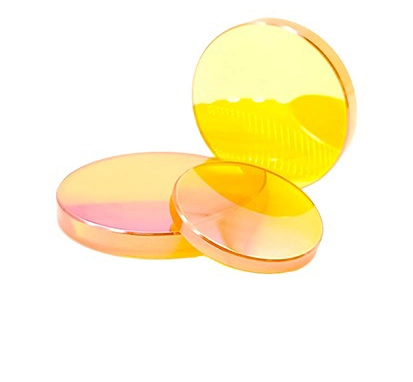
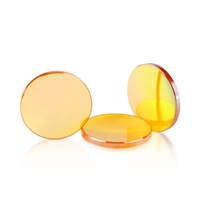
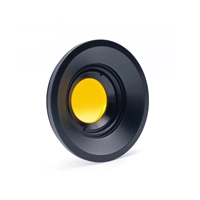
CO2 laser systems operating at the 10.6-micron wavelength require optical components that can transmit infrared radiation efficiently while maintaining surface precision under thermal load. The lens material at the heart of these systems — CVD ZnSe (zinc selenide produced by chemical vapor deposition) — has become the industry standard for CO2 laser focusing and transmitting optics due to its low absorption coefficient at the CO2 laser wavelength and its ability to be polished to high optical surface quality.
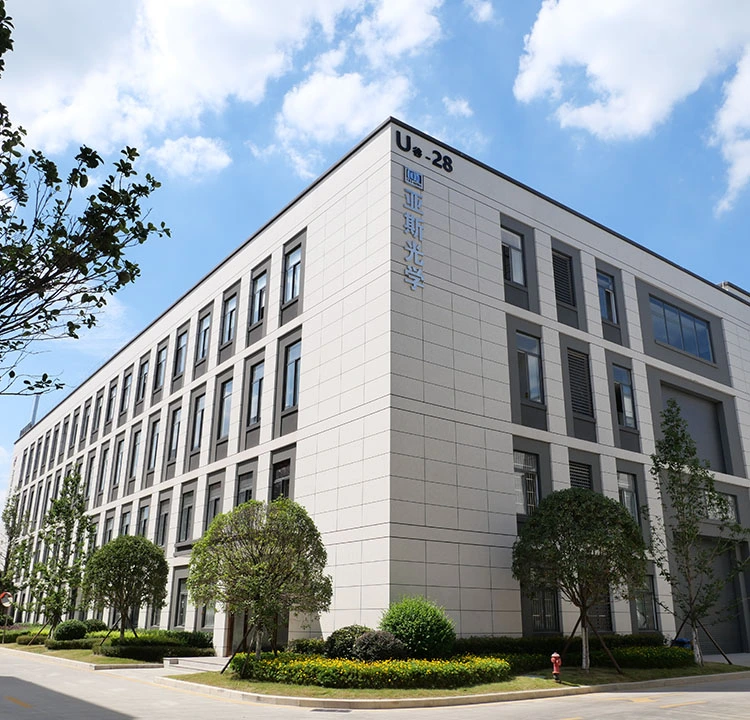
Yasi Optics, an optical component manufacturer with over 20 years of industry experience, produces a range of CO2 laser lenses including CVD ZnSe focusing lenses, reflectors, beam expanders, F-theta scan lenses, beam combiners, output couplers, and protective windows. With ISO9001 certification, a workforce of over 100 skilled workers, and a team of more than 10 engineers, the company serves medical, laser testing equipment, scientific research, and security applications. This article examines the properties of CVD ZnSe laser lenses, their key functions, application areas, and factors to consider when sourcing laser optics.
CVD ZnSe (Chemical Vapor Deposition Zinc Selenide) is a polycrystalline material produced through a chemical vapor deposition process that creates a highly pure, homogeneous optical material. This manufacturing method produces material with uniform refractive index and low stress birefringence — properties essential for laser optical components where beam quality must be preserved.
In CO2 laser systems, ZnSe lenses serve several optical functions:
· Focusing Lenses: Concentrate the laser beam to a small spot size for cutting, engraving, or welding applications. The precision of the focal point directly affects cut quality and processing speed.
· Output Couplers: Partially reflective optics that extract the laser beam from the resonant cavity while allowing a portion of the energy to remain inside to sustain lasing action.
· Beam Expanders: Optical systems that enlarge the beam diameter before focusing, which reduces the final spot size and improves beam quality.
· Beam Combiners: Combine multiple laser beams (such as a visible alignment beam and the infrared CO2 laser beam) into a coaxial output.
· Protective Windows: Transparent optics that shield sensitive internal components from dust, debris, and spatter generated during laser processing.
Yasi Optics also offers PVD ZnSe lenses and GaAs (gallium arsenide) lenses as alternative materials for CO2 laser applications, providing options for buyers with specific material requirements.
CVD ZnSe exhibits very low absorption at the CO2 laser wavelength of 10.6 microns, minimizing thermal loading on the lens during high-power laser operation. Low absorption reduces lens heating, which in turn prevents thermal lensing effects that can shift the focal point and degrade beam quality during prolonged operation.
With appropriate anti-reflective coatings, ZnSe lenses achieve high transmission rates at the CO2 laser wavelength — typically above 99.5% per surface for coated optics. This maximizes the laser energy delivered to the workpiece and reduces energy waste in the optical path.
Yasi Optics applies precision polishing techniques to achieve the surface flatness and smoothness required for laser optics. Surface quality directly affects beam quality — imperfections scatter laser energy, reducing processing precision and potentially creating hot spots in the beam profile. The company's quality system is designed to meet the precision standards required for laser applications.
Yasi Optics applies coatings that enhance lens durability, reduce reflection, and improve transmission efficiency. Coatings are critical for laser lens performance — uncoated ZnSe surfaces reflect approximately 17% of incident light at each surface, meaning an uncoated lens would transmit only about 70% of incoming laser energy. Anti-reflective coatings reduce this reflection to less than 0.5% per surface.
The CVD production process yields ZnSe material with high purity and uniform optical properties throughout the volume. This homogeneity ensures consistent refractive index across the lens aperture, preventing beam distortion.
Yasi Optics offers customization for laser lens specifications including diameter, focal length, thickness, and coating design. For example, the company's CO2 laser output couplers can be tailored to fit different laser system configurations, and focusing lenses are available in various focal lengths to match specific processing requirements.
The company offers competitive pricing structures including bulk discounts, making it a practical sourcing option for laser system manufacturers and distributors requiring volume quantities.
CO2 lasers are used in medical procedures including surgery, dermatology, and dental applications where precise tissue ablation is required. ZnSe focusing lenses in medical laser systems must deliver consistent focal precision to ensure treatment accuracy. The optics must also meet the reliability standards required for medical equipment.
Industrial CO2 laser cutting and engraving systems use ZnSe lenses to focus the beam for material processing. Applications range from cutting acrylic, wood, and textiles to engraving metals and marking electronic components. Lens precision and coating durability directly affect cut edge quality and processing speed.
Laser testing equipment uses ZnSe optics for beam profiling, power measurement, and optical alignment. These applications require lenses with known optical properties and minimal wavefront distortion.
Research laboratories use CO2 laser systems for spectroscopy, materials processing studies, and optical experiments. Custom ZnSe optics support experimental setups with non-standard configurations.
Infrared optical components find applications in security systems, thermal imaging, and surveillance where CO2 laser sources or infrared transmission is involved.
1. Laser Power Level: Confirm the lens material and coating are rated for your laser's power density. Higher-power lasers require materials with lower absorption coefficients and coatings with higher damage thresholds.
1. Focal Length Selection: The focal length determines the working distance and spot size. Shorter focal lengths produce smaller spot sizes but have shorter depth of focus. Match the focal length to your processing requirements — cutting typically uses shorter focal lengths, while engraving may use longer focal lengths.
1. Lens Diameter: The lens diameter must accommodate the beam diameter at the lens position. Undersized lenses clip the beam, causing energy loss and potential thermal damage to the lens mount.
1. Coating Specification: Specify the coating for your laser wavelength. ZnSe lenses are typically coated for 10.6 microns, but some applications use multiple wavelengths requiring dual-band coatings.
1. Surface Quality Requirements: Review the surface quality specifications (scratch-dig and flatness) against your application requirements. Precision cutting and medical applications demand higher surface quality than general-purpose marking.
1. Thickness and Edge Configuration: Lens thickness affects thermal behavior and mechanical mounting. Confirm the edge configuration matches your lens holder design.
1. Quantity and Lead Time: For volume orders, confirm the manufacturer's production capacity and lead times. Yasi Optics maintains stock for common ZnSe lens specifications, which can reduce delivery times for standard parts.
Yasi Optics brings the following capabilities to laser lens manufacturing:
· 20+ Years of Optical Manufacturing Experience: The company's experience spans optical glass components, infrared optical elements, and laser lens production.
· ISO9001 Certified Quality System: Manufacturing processes operate under an ISO9001-certified quality management system.
· Engineering Team: A team of 10+ engineers supports product design, coating development, and custom optic specification.
· Production Capability: Over 100 skilled workers operate the company's manufacturing facility, supporting both standard product lines and custom orders.
· Material Range: Products are manufactured from K9 glass, quartz, fused silica, ZnSe, ZnS, YAG, sapphire, germanium, silicon, CaF2, BaF2, MgF2, LiF, and GaAs — covering visible, infrared, and laser wavelength applications.
· Product Portfolio: Laser lens products include focusing lenses (CVD ZnSe, PVD ZnSe, GaAs), reflectors (Si mirrors), beam expanders, F-theta scan lenses, scanning vibrating mirrors, beam combiners, output couplers, and protective windows.
· Customization: Extensive customization options for lens dimensions, focal lengths, coatings, and substrate materials.
· Quality Traceability: The company implements process-wide quality data traceability for laser lens products, allowing tracking of manufacturing parameters for each production batch.
Buyers should request optical specifications, coating curves, and sample evaluation to verify lens performance before placing volume orders.
CVD ZnSe CO2 laser lenses are critical components in industrial, medical, and research laser systems where infrared transmission efficiency and beam quality directly determine processing performance. Selecting the right lens requires matching material properties, focal length, diameter, coating, and surface quality to the specific laser application.
Yasi Optics, with over 20 years of manufacturing experience, ISO9001 certification, and a comprehensive product range covering ZnSe, GaAs, and other optical materials, serves as a supplier for laser system manufacturers and research institutions. The company's customization capabilities and quality traceability system support both standard and application-specific optic requirements.
For laser lens sourcing inquiries, contact Yasi Optics to discuss specifications, request samples, and obtain pricing for your application.