 Optical Glass Components
 Infrared Optical Elements
 Laser Lens
 English
 Español
 italiano
 русский
 Türkçe
 Polska


Dec 30-2024
Germanium glass lenses are vital components in infrared (IR) cameras, playing a significant role in enhancing the image quality for various applications. These lenses offer unmatched advantages in IR systems, particularly for their superior transmission properties in the infrared spectrum, which is essential for capturing clear and detailed images in low-light or no-light environments. Infrared cameras are used in a wide range of fields, from industrial inspections and medical diagnostics to military and surveillance applications. In this article, we will explore how germanium glass lenses enhance the performance of infrared cameras, enabling clearer, more accurate images and better overall system functionality.
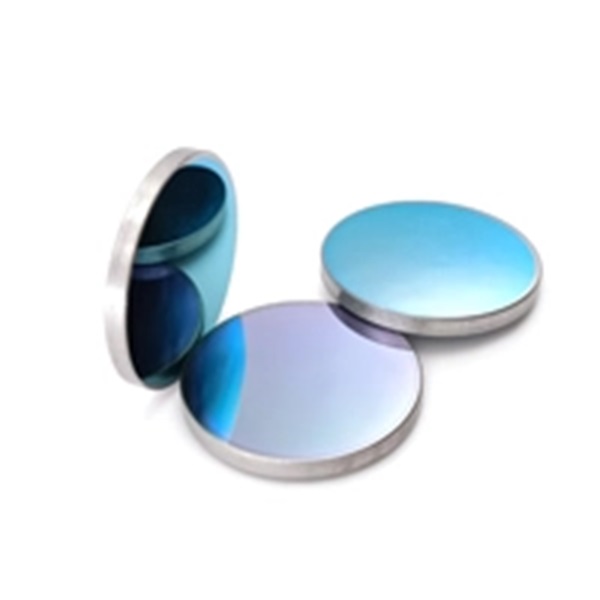
One of the key factors that make germanium glass lenses ideal for infrared cameras is their exceptional transmission in the infrared region of the electromagnetic spectrum. Unlike conventional optical materials, germanium has high transmission capabilities in the mid-wave infrared (MWIR) and long-wave infrared (LWIR) bands, which are commonly used in thermal imaging and infrared spectroscopy. This property ensures that germanium glass lenses can capture more infrared light, leading to higher resolution and clarity in the resulting images. In IR applications, where the intensity of light is often lower than in visible wavelengths, maximizing the amount of transmitted light is critical for improving the quality of the captured image. Germanium lenses excel in this area, providing enhanced image clarity in low-contrast scenarios, which is essential for identifying subtle temperature differences or detecting heat signatures in thermal imaging applications.
Infrared cameras are often used in challenging environments, such as high-temperature industrial settings, outdoor surveillance, or military operations. In such cases, the durability and thermal stability of the lens are essential for maintaining consistent image quality. Germanium glass lenses are known for their excellent thermal stability, allowing them to perform well under extreme temperatures. Germanium’s low coefficient of thermal expansion means that it retains its shape and optical properties even when exposed to rapid temperature fluctuations. This makes it highly reliable in infrared cameras used in fields such as aerospace, defense, and industrial inspection. By maintaining precise alignment and performance, germanium glass lenses help ensure that the infrared camera continues to produce high-quality images even in harsh environmental conditions.
The accuracy of an infrared camera depends not only on the amount of light transmitted through the lens but also on how well the lens can focus and direct the light. Germanium glass lenses are highly effective at minimizing optical distortions, such as chromatic aberration and spherical aberration, which can degrade image quality. By providing sharp, undistorted imaging, these lenses enable infrared cameras to capture fine details and subtle contrasts, which are crucial for applications such as detecting defects in materials or conducting precision measurements in scientific research. The ability of germanium glass lenses to maintain optical performance and minimize distortions leads to clearer, more accurate images, making them a preferred choice for high-performance infrared imaging systems.
Another significant advantage of germanium glass lenses is their versatility and ability to be customized for specific infrared applications. Whether it's designing lenses for a particular camera sensor, optimizing the focal length, or applying coatings to enhance performance, germanium lenses can be tailored to meet the exact needs of different industries. This level of customization ensures that infrared cameras equipped with germanium glass lenses can deliver optimal image quality for a variety of applications. For instance, in medical diagnostics, germanium lenses can be optimized for high sensitivity to specific wavelengths, enabling clearer images for thermal imaging and disease detection. In industrial applications, these lenses can be fine-tuned to detect minute temperature variations in equipment or processes, helping with predictive maintenance and quality control.
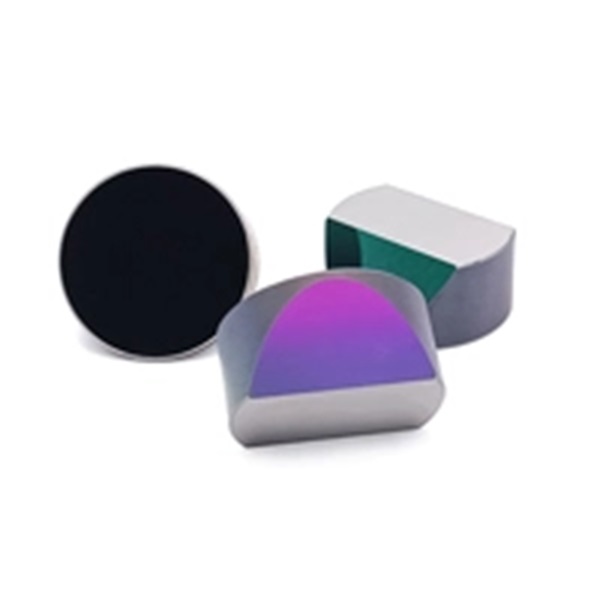
Coatings play a critical role in further improving the performance of germanium glass lenses in infrared cameras. By applying specialized coatings, such as anti-reflective coatings, germanium lenses can achieve higher transmission rates and reduce unwanted reflections that might otherwise degrade the quality of the captured image. These coatings help ensure that more infrared light passes through the lens, contributing to better image contrast and clarity. Additionally, coatings can protect the lens from environmental factors such as dust, moisture, and scratches, further enhancing the durability and longevity of the infrared camera system. The combination of germanium glass lenses with advanced coatings enables infrared cameras to maintain high performance, even in the most demanding environments.
In conclusion, germanium glass lenses significantly improve the image quality in infrared cameras by providing superior transmission in the infrared spectrum, maintaining thermal stability in extreme conditions, minimizing optical distortions, and offering customization options for specialized applications. These lenses are crucial for a wide range of industries, including defense, medical diagnostics, industrial inspection, and scientific research. Their ability to enhance clarity, resolution, and overall performance makes them indispensable in high-performance infrared imaging systems. For those seeking advanced germanium glass lenses for their infrared cameras, Yasi Optics offers customized solutions designed to meet the unique needs of various optical applications.