 Optical Glass Components
 Infrared Optical Elements
 Laser Lens
 English
 Español
 italiano
 русский
 Türkçe
 Polska

Aug 20-2024
Straight angle prisms are versatile optical components widely used in imaging systems, laser applications, and scientific research. Whether you're an engineer designing optical instruments or a researcher working on cutting-edge experiments, understanding how to use a right angle prism effectively can elevate the performance of your optical setup. In this guide, we’ll walk you through the fundamentals of right angle prisms, their applications, and practical tips for using them.
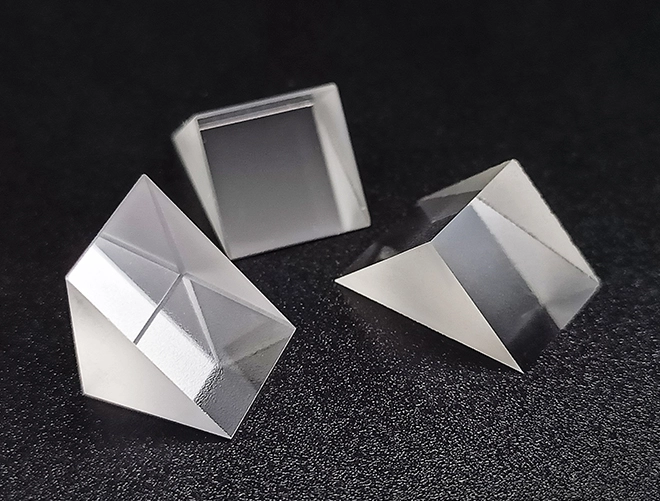
A right angle prism is a triangular optical element with one 90-degree angle and two 45-degree angles. Typically made from high-quality optical glass like BK7, fused silica, or infrared materials like ZnSe, it manipulates light through reflection, refraction, or dispersion. The prism’s hypotenuse face can reflect light internally, making it ideal for redirecting light paths or inverting images.
Key Features of Right Angle Prisms:
Total Internal Reflection (TIR): When light hits the hypotenuse at an angle greater than the critical angle, it reflects internally without loss.
Versatile Applications: Used in periscopes, cameras, laser systems, and spectrometers.
Customizable: Available in various sizes, materials, and coatings to suit specific wavelengths or environmental conditions.
At Yasi Optics-a right angle prism supplier, our right angle prisms are crafted with precision grinding and advanced coating technologies, ensuring high surface quality and durability for industrial, medical, and military applications.
Before using a right angle prism, identify its role in your optical system:
Beam Redirection: Redirect light by 90 degrees using total internal reflection.
Image Inversion: Flip or invert images in imaging systems like periscopes or telescopes.
Beam Splitting: With appropriate coatings, the prism can split light into transmitted and reflected components.
Dispersion: Use the prism to separate light into its spectral components for spectroscopy.
For example, in laser systems, Yasi Optics’ high-power laser right angle prisms, made from fused silica, ensure minimal energy loss and withstand intense laser beams.
Choosing the correct prism is critical for optimal performance:
Material: Select BK7 for visible light, fused silica for UV, or ZnSe for infrared applications.
Coatings: Anti-reflective coatings reduce surface reflections, while metallic or dielectric coatings enhance reflectivity for specific wavelengths.
Size and Tolerance: Ensure the prism’s dimensions and angle tolerances match your system’s requirements.
Yasi Optics offers customized China optics like right angle prisms with surface flatness up to λ/10 and angle tolerances within ±2 arcseconds, tailored to your needs.
Proper mounting ensures stability and alignment:
Use a precision optical mount to secure the prism without stress, which could distort the optical surfaces.
Align the prism’s hypotenuse face to achieve the desired light path (e.g., 90-degree deflection).
Avoid touching optical surfaces to prevent fingerprints or scratches. Use gloves or optical tweezers.
For Reflection: Position the prism so the incoming light strikes the hypotenuse at an angle greater than the critical angle (e.g., 41.8° for BK7 glass in air) to ensure total internal reflection.
For Beam Splitting: Apply a partially reflective coating to the hypotenuse and align the prism to balance transmitted and reflected light.
For Imaging: Ensure the prism is oriented to produce the desired image orientation (e.g., right-angle prisms invert images when used in periscopes).
Use a laser or collimated light source to verify alignment. Yasi Optics’ prisms are tested with interferometers to guarantee precise light manipulation.
Test the prism in your system to confirm performance. Check for image clarity, beam deviation, or spectral output as needed.
Clean the prism with lens tissue and optical-grade cleaning solutions if dust or smudges appear.
If performance is suboptimal, verify alignment, coating compatibility, or consult with your supplier for troubleshooting.
Right angle prisms are indispensable in various fields:
Industrial: Beam steering in laser cutting or engraving machines.
Scientific Research: Spectroscopy and optical experiments requiring precise light control.
Military and Defense: Periscopes and rangefinders, such as Yasi Optics’ M17 periscope prisms for rugged environments.
Medical: Endoscopy and diagnostic imaging systems.
Telecommunications: Optical signal routing in fiber optic systems.
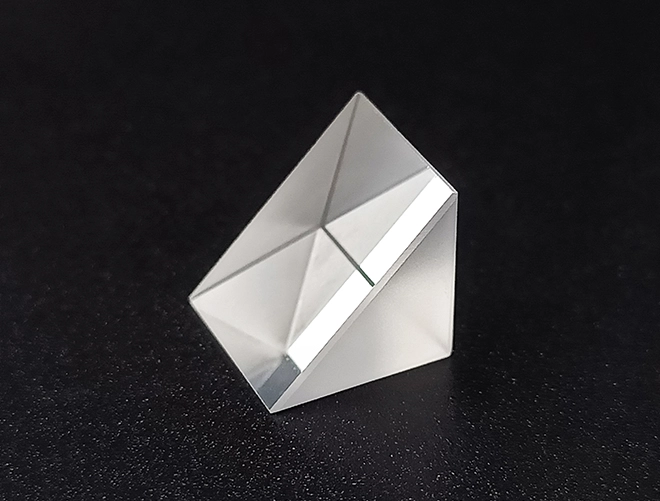
At Sichuan Yasi Optics Co., Ltd., we specialize in high-precision glass optical components such as right angle prisms designed for demanding applications. Here’s why engineers and researchers trust us:
Superior Quality: Our prisms are manufactured in ISO9001-certified facilities with strict quality control, ensuring high transmission and minimal wavefront distortion.
Customization: We offer tailored solutions, from material selection (BK7, fused silica, ZnSe) to specialized coatings for UV, visible, or IR wavelengths.
Global Reach: With over 20 years of experience, we serve clients worldwide, from aerospace to medical industries.
Technical Support: Our expert team provides guidance on prism selection, integration, and optimization.
Using a right angle prism effectively requires understanding its optical properties, selecting the right specifications, and ensuring precise alignment. Whether you’re building a laser system, a periscope, or a spectrometer, a high-quality prism is key to success. At Yasi Optics, we’re committed to delivering precision optical components that meet your exact needs.
Q: Can I use a right angle prism for reversing an image?
A: Yes, a right angle prism can be used to reverse an image by reflecting light off of its surfaces. This makes it a popular choice in instruments like binoculars and microscopes, where the orientation of the image is critical for proper viewing.
Q: How do I maintain a right angle prism?
A: To maintain a right angle prism, avoid exposing it to rough handling, excessive moisture, or extreme temperatures. Clean it using a soft, lint-free cloth and proper optical cleaning solutions to avoid scratches. Store the prism in a dry, dust-free environment to preserve its optical quality.
Q: Can I purchase right angle prisms from Yasi Optics?
A: Yes, Yasi Optics offers high-quality right angle prisms designed for various applications, including research, military, and optical instruments. Visit our website to explore our selection and find the perfect prism for your needs.
Q: Are right angle prisms used in military applications?
A: Yes, right angle prisms are commonly used in military applications, especially in periscopes and surveillance systems. They allow for efficient and covert observation by redirecting light at precise angles without altering the image orientation, making them essential for tactical operations.